
Table of Contents
- Introduction
- History of Sign Painting
- Characteristics of Vintage Sign Painting Style
- The Resurgence of Retro Signage in Modern Design
- Fonts That Capture the Vintage Sign Painting Essence
- How to Incorporate Vintage Sign Painting in Your Projects
- Tools and Tips for Digital and Physical Signage
- Conclusion
- References
1. Introduction
The vintage sign painting style is a timeless design approach that combines artistry, craftsmanship, and nostalgic charm. From hand-painted storefronts to retro posters, this style captures the essence of traditional signage while remaining highly relevant in modern graphic design. Designers today are increasingly drawn to the vintage sign painting style because it conveys authenticity, uniqueness, and a human touch that digital fonts alone cannot replicate.
2. History of Sign Painting
The vintage sign painting style Sign painting has its roots in the 19th century, when businesses relied heavily on hand-painted signs to communicate with customers. Artisans used brushes, enamel paints, and gold leaf to create striking visuals on wood, glass, and metal surfaces.
Key historical highlights include:
- The Gold Rush Era: Elaborate lettering and flourishes were used to attract attention in busy marketplaces.
- 1920s–1940s Commercial Signs: Streamlined, bold lettering emerged for storefronts, theaters, and gas stations.
- The Modern Revival: Today, designers and artisans are rediscovering hand-painted techniques for posters, murals, and custom branding projects.
This rich history informs modern designers on how to capture the authentic vintage feel while adapting to contemporary mediums.
3. Characteristics of Vintage Sign Painting Style
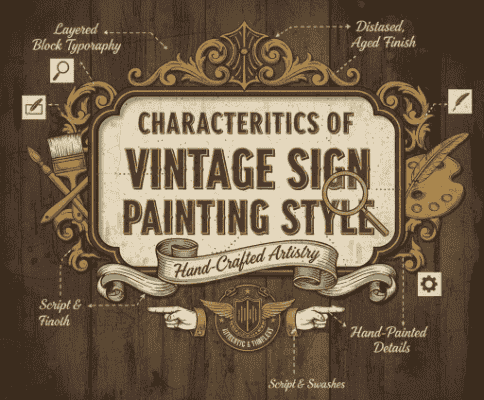
Understanding the defining traits of this style is crucial for achieving authenticity. Key characteristics include:
- Hand-Crafted Lettering: Slight irregularities in letterforms reflect human touch.
- Decorative Elements: Swashes, banners, shadows, and filigree enhance visual appeal.
- Bold Color Palettes: Contrasting colors like red, gold, and teal create attention-grabbing signage.
- Texture and Depth: Brush strokes or layered paints add dimension to designs.
Designers often use digital fonts that mimic these features for modern applications, maintaining the charm without losing scalability.
4. The Resurgence of Retro Signage in Modern Design
Vintage aesthetics have seen a major comeback in graphic design, advertising, and interior decoration. Retro sign painting styles are now widely used in:
- Restaurant menus and coffee shop boards
- Vintage-inspired posters and event banners
- Social media graphics and promotional materials
Digital tools allow designers to recreate hand-painted effects, but nothing quite matches the authenticity of the traditional brush. This blend of old-school charm with new technology offers limitless creative possibilities.
5. Fonts That Capture the Vintage Sign Painting Essence
Choosing the right font is critical to evoke the vintage sign painting style in your projects. Fonts designed for this purpose often feature hand-lettered characteristics and decorative elements.
On RaisProject, you can find a curated selection of fonts perfect for vintage and hand-painted designs:
- Break Sucker Display Font – Bold and textured for retro posters.
- Wac Man Display Font – Inspired by classic sign lettering.
- Glitch Zone Display Font – Combines vintage charm with modern flair.
- Dariena Floralie Font – Decorative script ideal for signage or packaging.
These fonts make it easy to bring the traditional charm of sign painting to digital design without losing authenticity.
6. How to Incorporate Vintage Sign Painting in Your Projects
To effectively use this style:
- Start with Reference Images: Look at historical signage for inspiration.
- Combine Fonts Strategically: Pair bold display fonts with script accents for hierarchy.
- Add Texture and Depth: Use brushes, gradients, or overlays to mimic paint texture.
- Pay Attention to Color: Stick to palettes that resonate with vintage aesthetics.
- Maintain Balance: Avoid over-decorating; simplicity often enhances readability.
Whether you’re creating a digital poster or a physical mural, these principles ensure your designs remain authentic and eye-catching.
7. Tools and Tips for Digital and Physical Signage
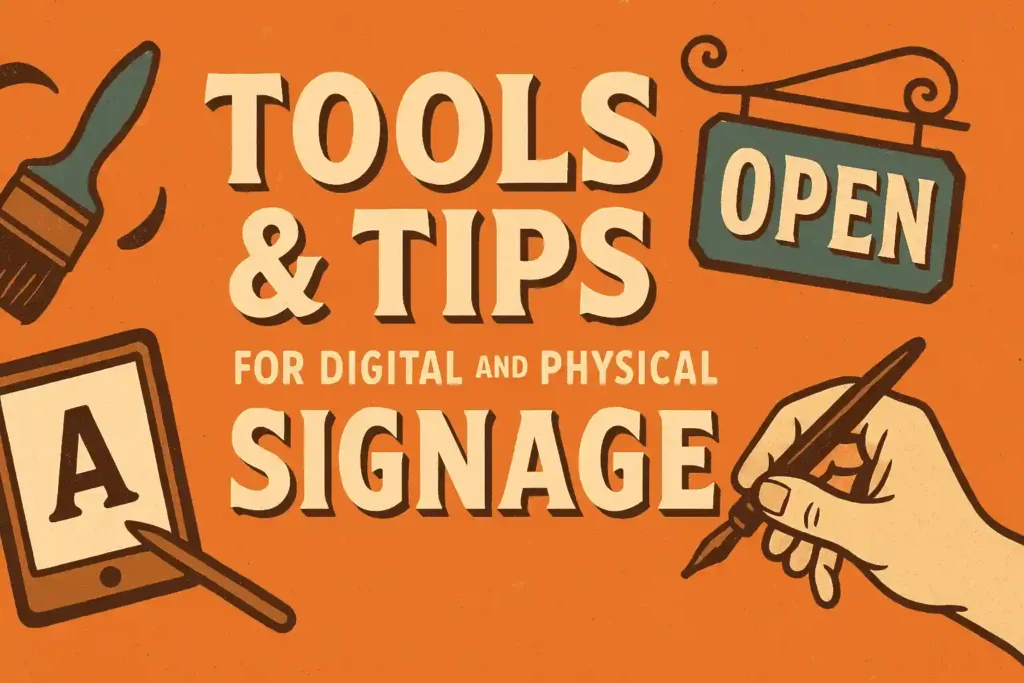
- Digital Tools: Adobe Illustrator, Photoshop, and Procreate offer brushes and vector tools that emulate hand-painted styles.
- Physical Tools: Traditional sign painting requires quality brushes, enamel paints, and proper surface preparation.
- Blending Both Worlds: Start with sketches on paper, then digitize using vector tools. This preserves the hand-crafted feel while making it scalable.
Proficiency in both mediums allows designers to fully harness the timeless charm of vintage sign painting.
8. Conclusion
The vintage sign painting style is more than a design trend; it is a celebration of craftsmanship, creativity, and nostalgia. Modern designers can leverage this style by choosing authentic fonts, understanding historical principles, and blending traditional techniques with digital tools.
Incorporating this style into your projects—from posters to branding—ensures that your work stands out with timeless appeal. Explore the carefully curated fonts at raisprojectFonts to start your journey into vintage-inspired design today.
9. References
- Letterhend. “The Uniqueness of Poster Design with Sign Painting Style.”
- Smith, Sarah. “Retro Typography & Sign Painting in Modern Design.” Creative Bloq, July 2022
- Lettering Daily. “Vintage Lettering & Sign Painting Inspiration.” 2021.e Books, 2018.